Autonomous SystemsYear 2026Completed
Autonomous 5-Channel IR Line Follower Robot
An autonomous line follower robot with a 5-channel TCRT5000 IR sensor array, L298N differential drive, and PID weighted error logic for smooth trajectory execution.
Arduino C++PID ControlIR SensingDifferential Drive
1 / 4
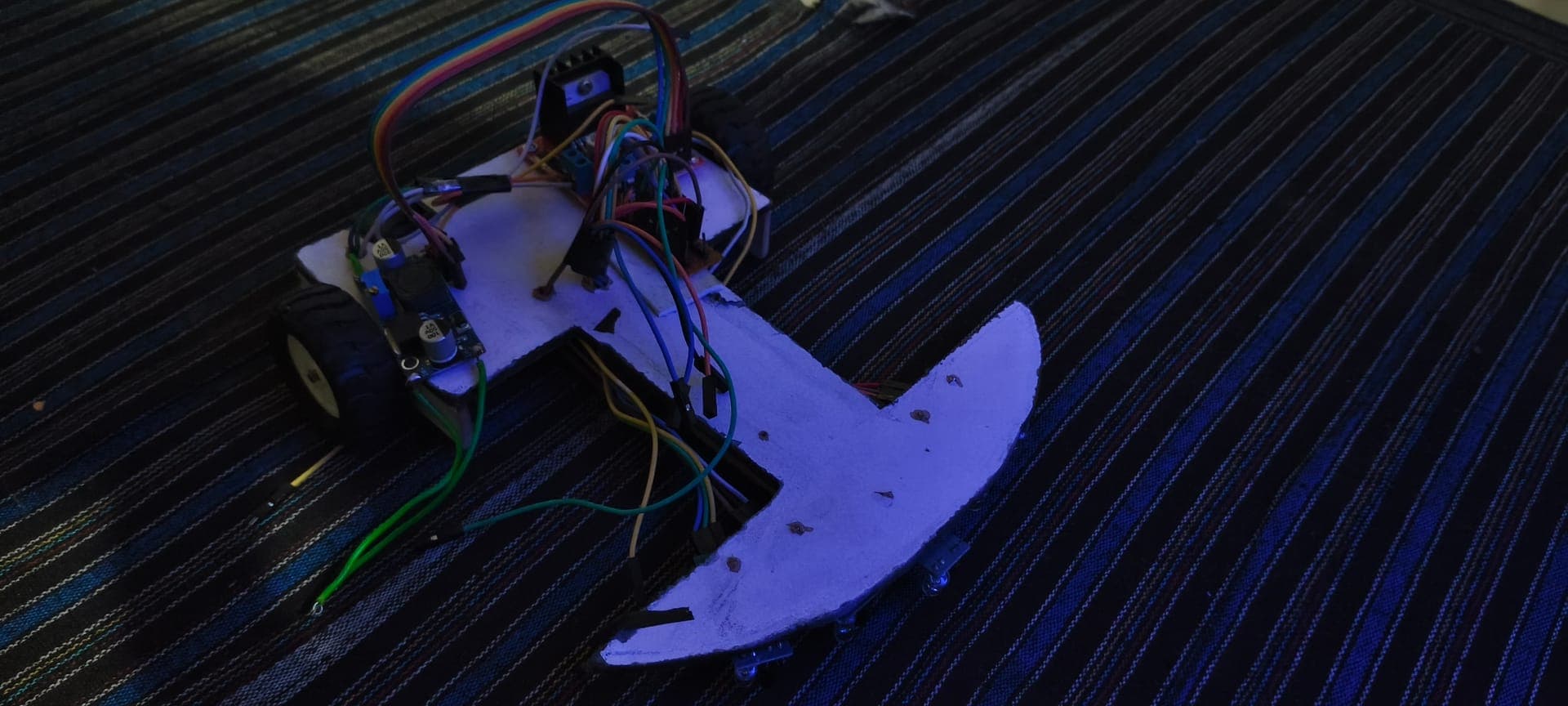
5-Channel IR sensor array & L298N chassis layout
Why We Built This
Standard 2-IR followers produce harsh, jerky turns. We engineered this 5-IR system so students could master proportional-derivative (PID) feedback control on affordable hardware.
Overview
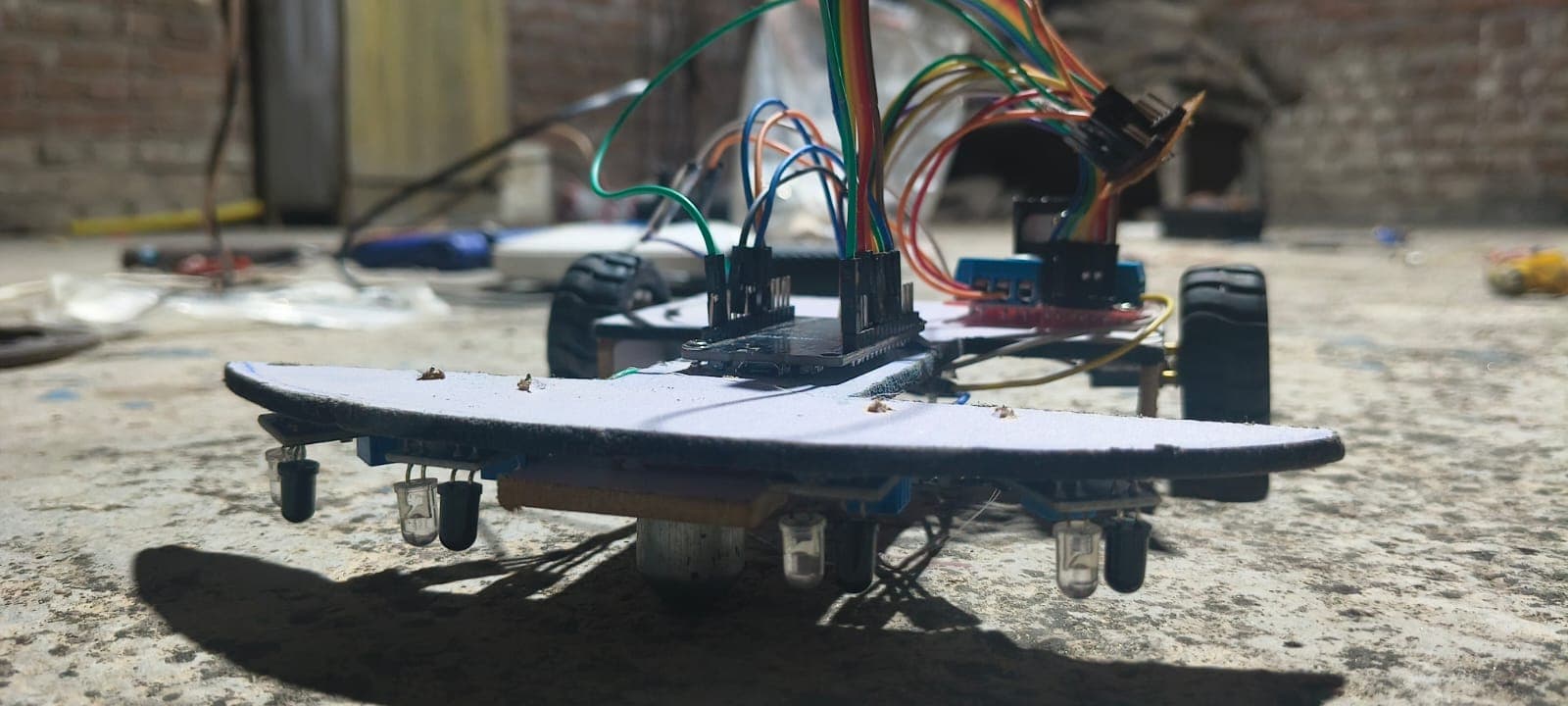
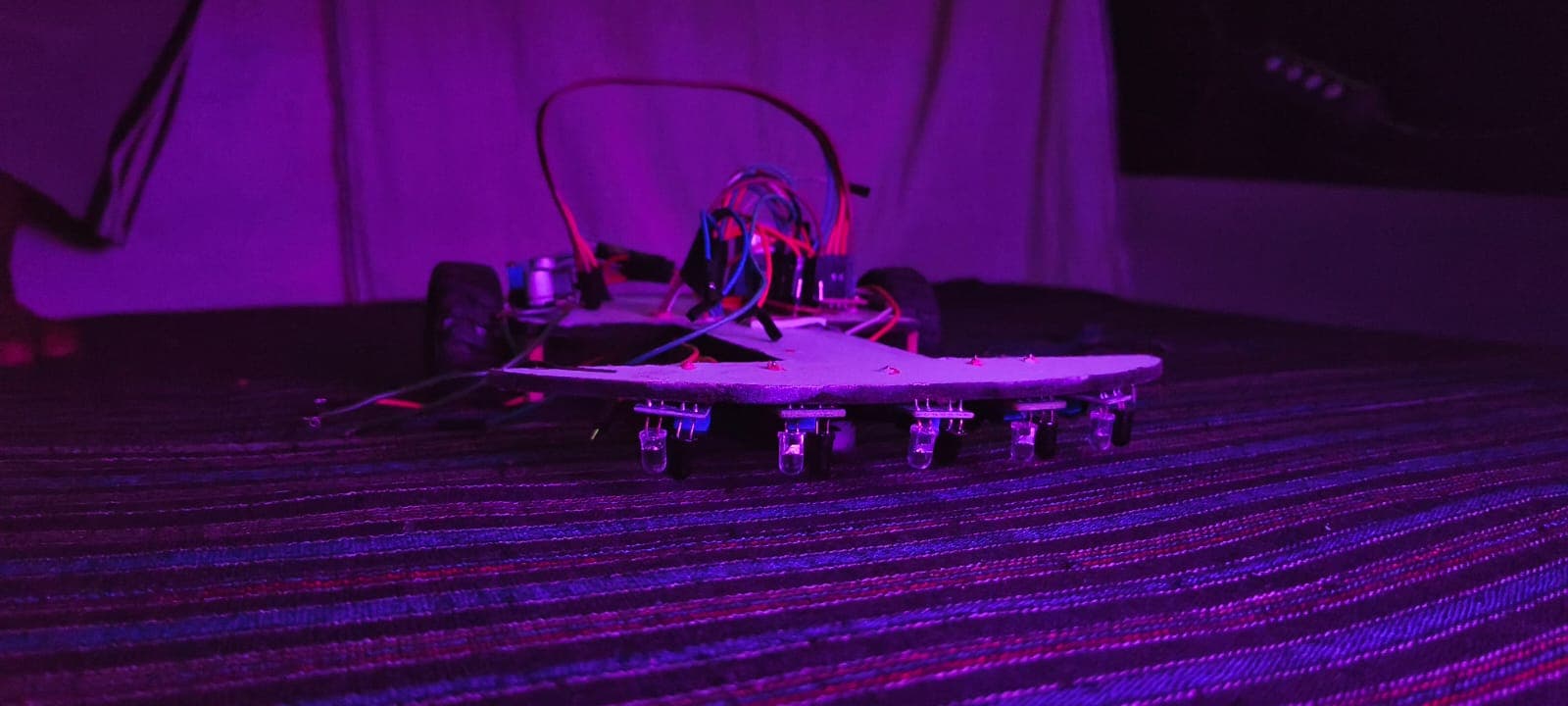
This autonomous line follower employs a 5-sensor IR array (Far Left, Near Left, Center, Near Right, Far Right) paired with an L298N dual H-bridge motor driver. By calculating weighted spatial errors across the array (-4 to +4), the robot dynamically computes smooth differential motor speeds using a PID algorithm (BaseSpeed ± Kp×Error + Kd×ΔError). If the line is momentarily lost, an error-memory recovery loop executes sharp pivot recovery.
Highlights & Key Features
- 5-Channel TCRT5000 IR sensor array with weighted error scale
- Proportional-Integral-Derivative (PID) dynamic motor control
- L298N Dual H-Bridge motor driver with PWM speed regulation
- Last-error tracking for automatic off-track pivot recovery
The Challenge
Eliminating mechanical jerks on sharp 90-degree track curves required fine-tuning the proportional (Kp=25.0) and derivative (Kd=15.0) gain parameters.
The Outcome
Achieved smooth, high-speed line tracking with zero oscillation on sharp bends, serving as a core hands-on control theory model.
Build Gallery & Photos
[4 PHOTOS]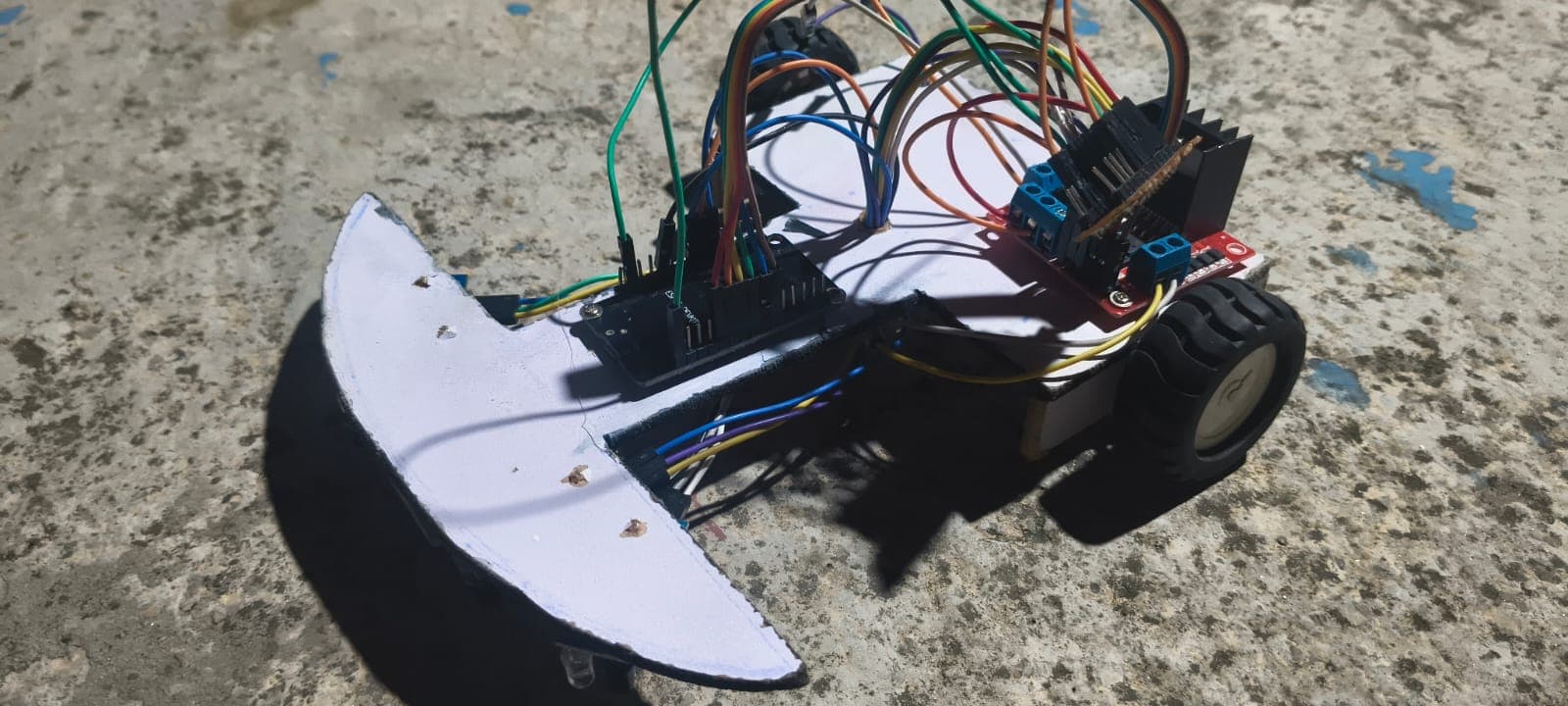
More Projects
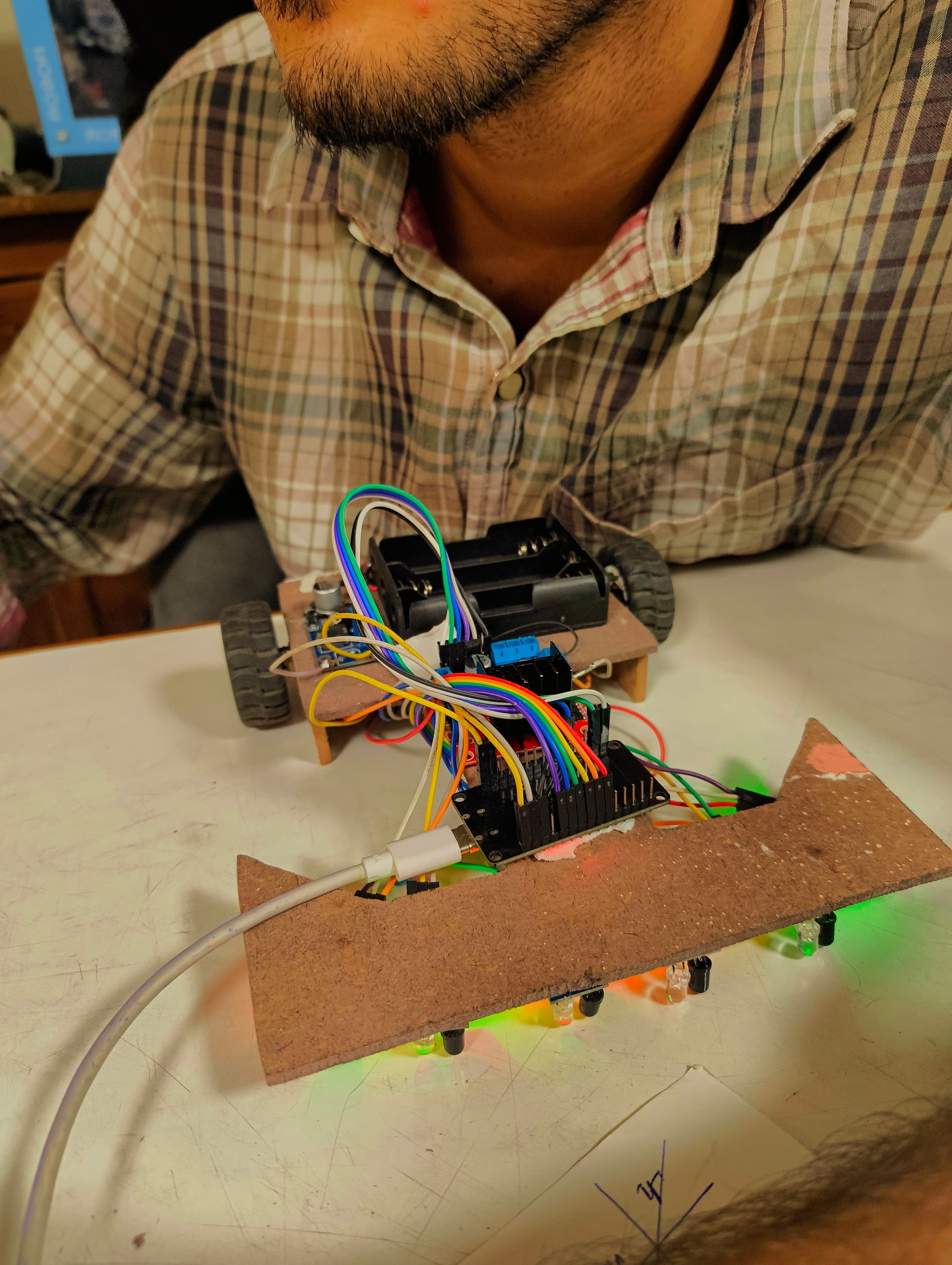 Autonomous Systems
2026
Autonomous Line Follower Robot 2
A second-generation autonomous line tracker featuring a wide-span multi-channel optical sensor bar, high-speed differential drive, and refined PID trajectory recovery algorithms.
Why we built this
Building on our first line follower, Line Follower 2 was designed with an extended sensor baseline and streamlined chassis to achieve higher cornering speeds and tighter tracking accuracy on complex tracks.
Free technical report & Drive guide available
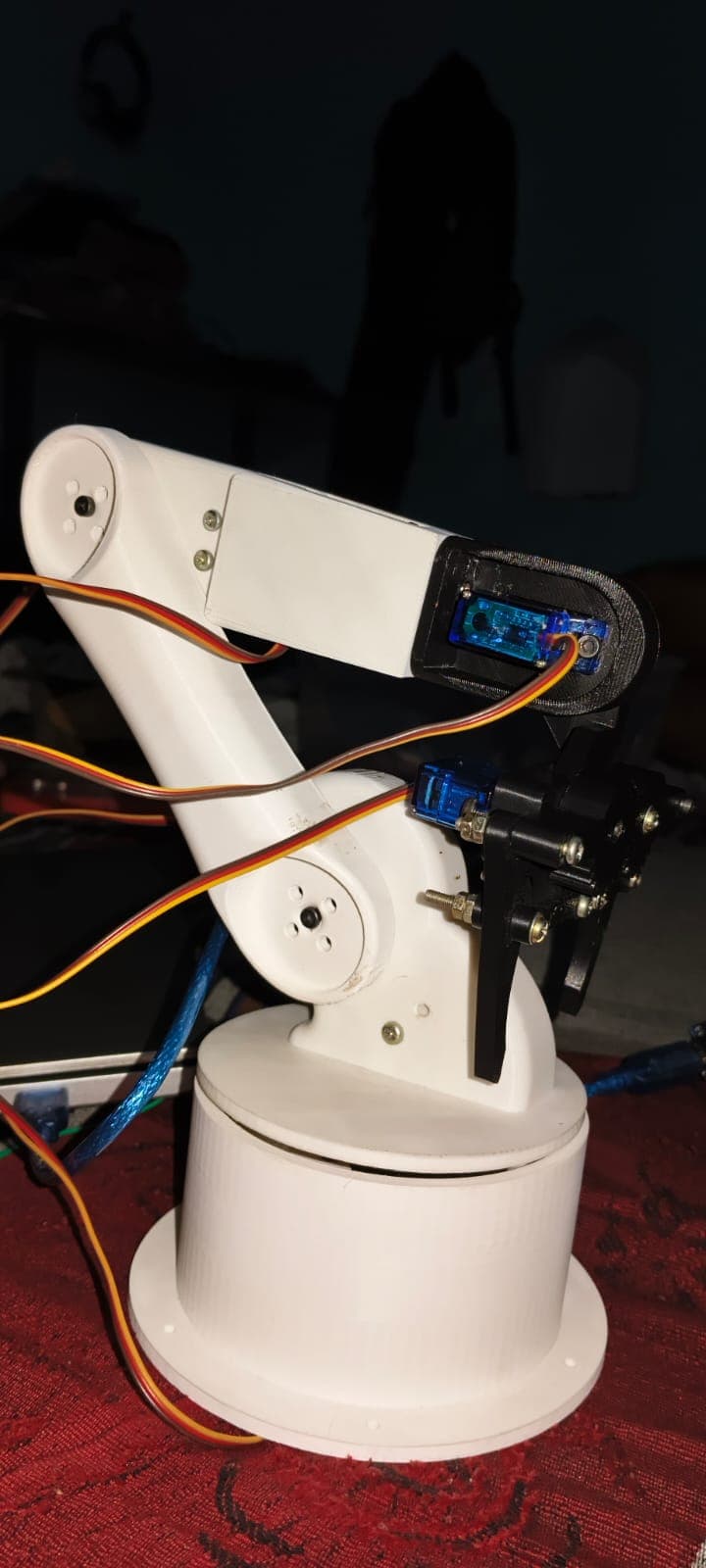 Human-Machine Interface
2026
6-DOF CyberDeck & 5-DOF Teach-Repeat Robotic Arm
Advanced 6-DOF & 5-DOF robotic manipulation systems featuring OpenCV AI vision hand tracking, Flask-SocketIO web control, and teach-repeat trajectory playback.
Why we built this
Advanced robot arms are typically locked behind proprietary software; we designed an open hardware ecosystem combining AI computer vision, web dashboards, and manual potentiometer teach modes.
Free technical report & Drive guide available
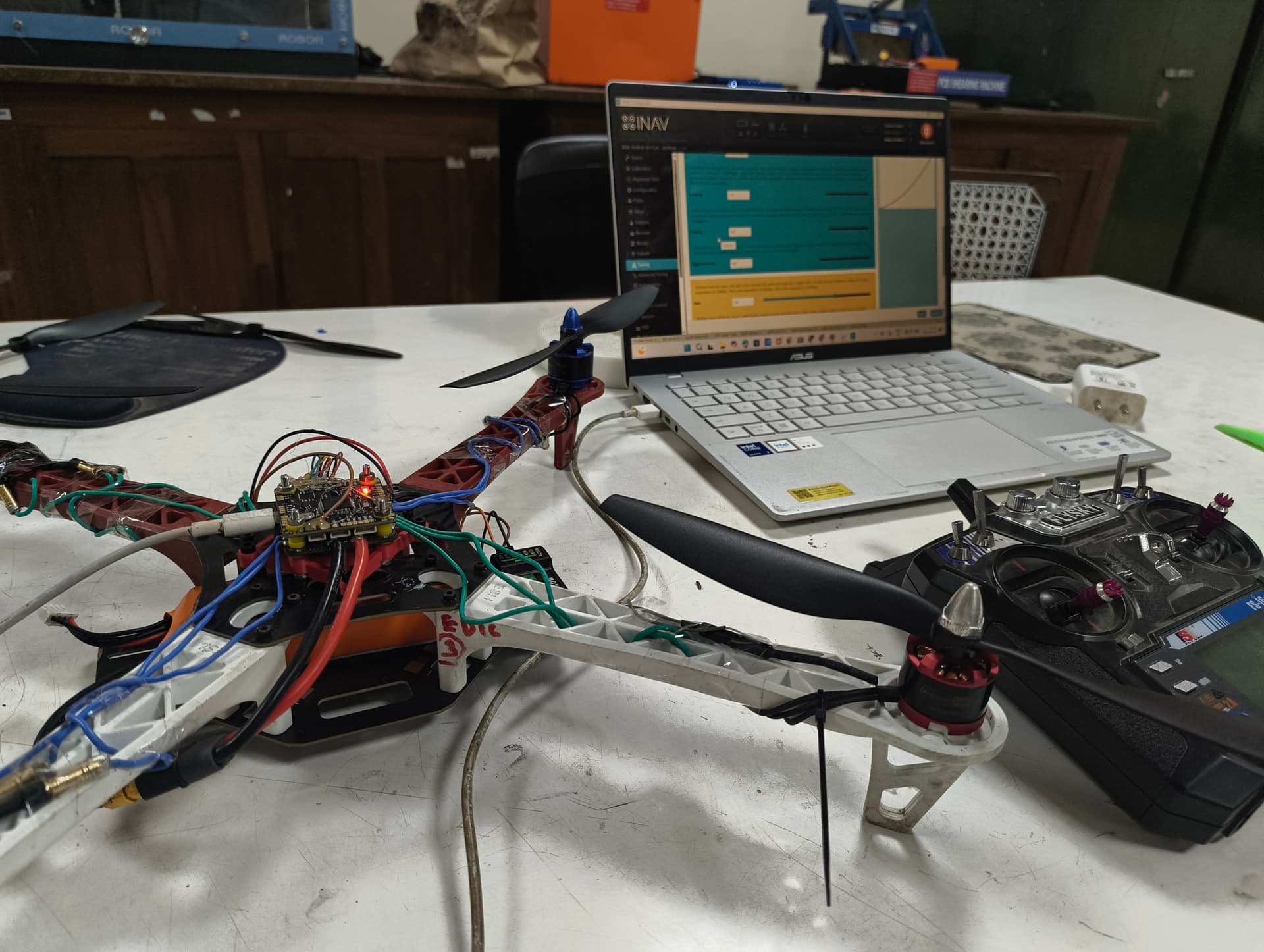 Aerial Robotics
2026
F450 Autonomous Quadcopter Drone
A custom-built F450 quadcopter drone featuring an STM32 F405 flight controller running INAV, 1000KV brushless motors, 1045 propellers, and 2.4GHz FlySky FS-i6 telemetry control.
Why we built this
Commercial ready-to-fly drones hide flight mechanics behind proprietary black boxes; we engineered an open-platform F450 quadcopter from component level so students could master flight dynamics, PID attitude tuning, and avionics.
Free technical report & Drive guide available