Control SystemsYear 2026Completed
Self-Balancing Robot 2
A second-generation inverted pendulum robot featuring a modular dual-deck chassis, low-center-of-gravity 3S 18650 battery bank, MPU6050 6-axis IMU, and closed-loop PID tilt recovery.
Arduino C++Inverted PendulumIMU Sensor FusionPID ControlPower Electronics
1 / 4
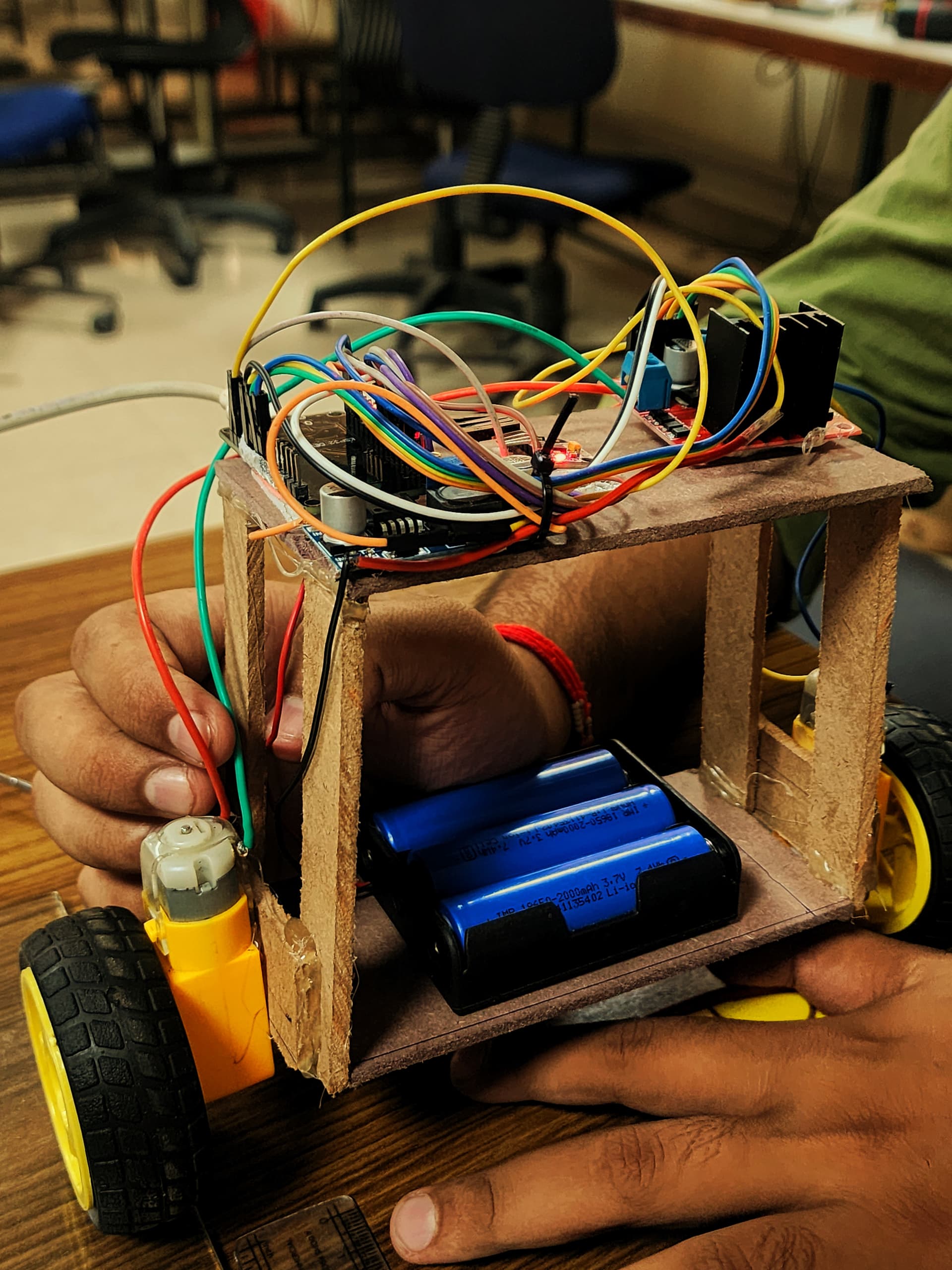
Dual-deck chassis assembly with low-slung 3S 18650 battery bank and high-torque gear motors
Why We Built This
Iterating on our initial self-balancing experiments, Version 2 addresses chassis rotational inertia by placing heavy battery cells low on the base deck, dramatically improving recovery stability.
Overview
Self-Balancing Robot 2 represents a major mechanical and control refinement of the classic inverted pendulum challenge. Featuring a vertical dual-deck wooden chassis, it isolates the heavy 3-cell 18650 battery bank close to the wheel axle to minimize rotational inertia, while housing the microcontroller, L298N motor driver, and MPU6050 6-axis IMU on the upper deck. The firmware integrates a high-frequency complementary filter to eliminate accelerometer vibration noise and executes a tuned PID balance loop that drives the dual geared DC motors to maintain upright equilibrium.
Highlights & Key Features
- Dual-deck chassis separating high-mass battery cells from sensitive electronics
- 3-Cell 18650 lithium-ion power bank delivering stable high-discharge current
- MPU6050 6-DOF IMU with complementary pitch filtering
- Real-time closed-loop PID tilt compensation for push recovery
- Dual high-torque DC gear motors with high-traction rubber wheels
The Challenge
Tuning the derivative (Kd) dampening term to stop high-frequency oscillations without delaying motor response during recovery from external disturbances.
The Outcome
Maintained upright stability with quick recovery from pushes, establishing a reliable hardware base for advanced control demonstrations.
Build Gallery & Photos
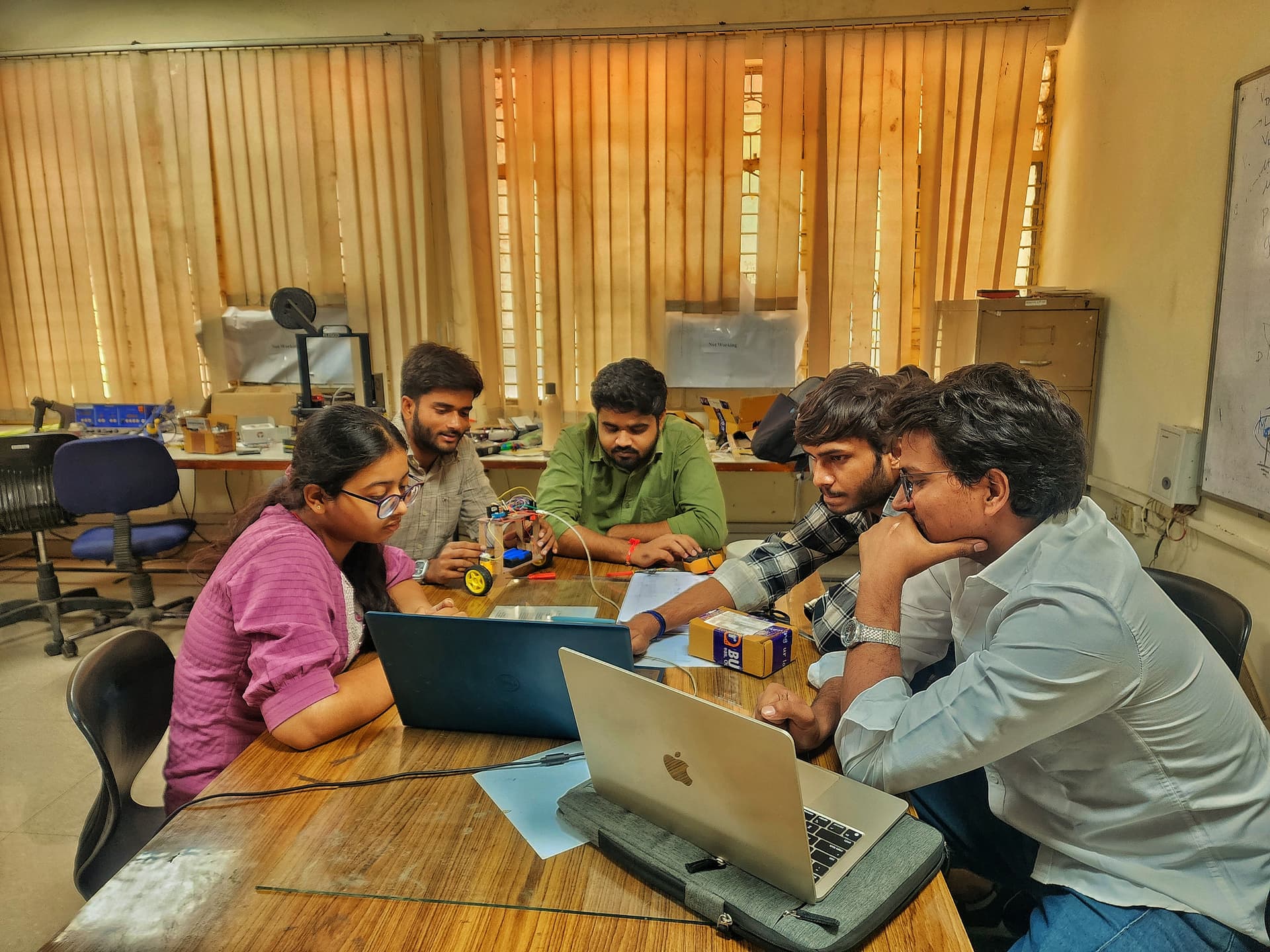
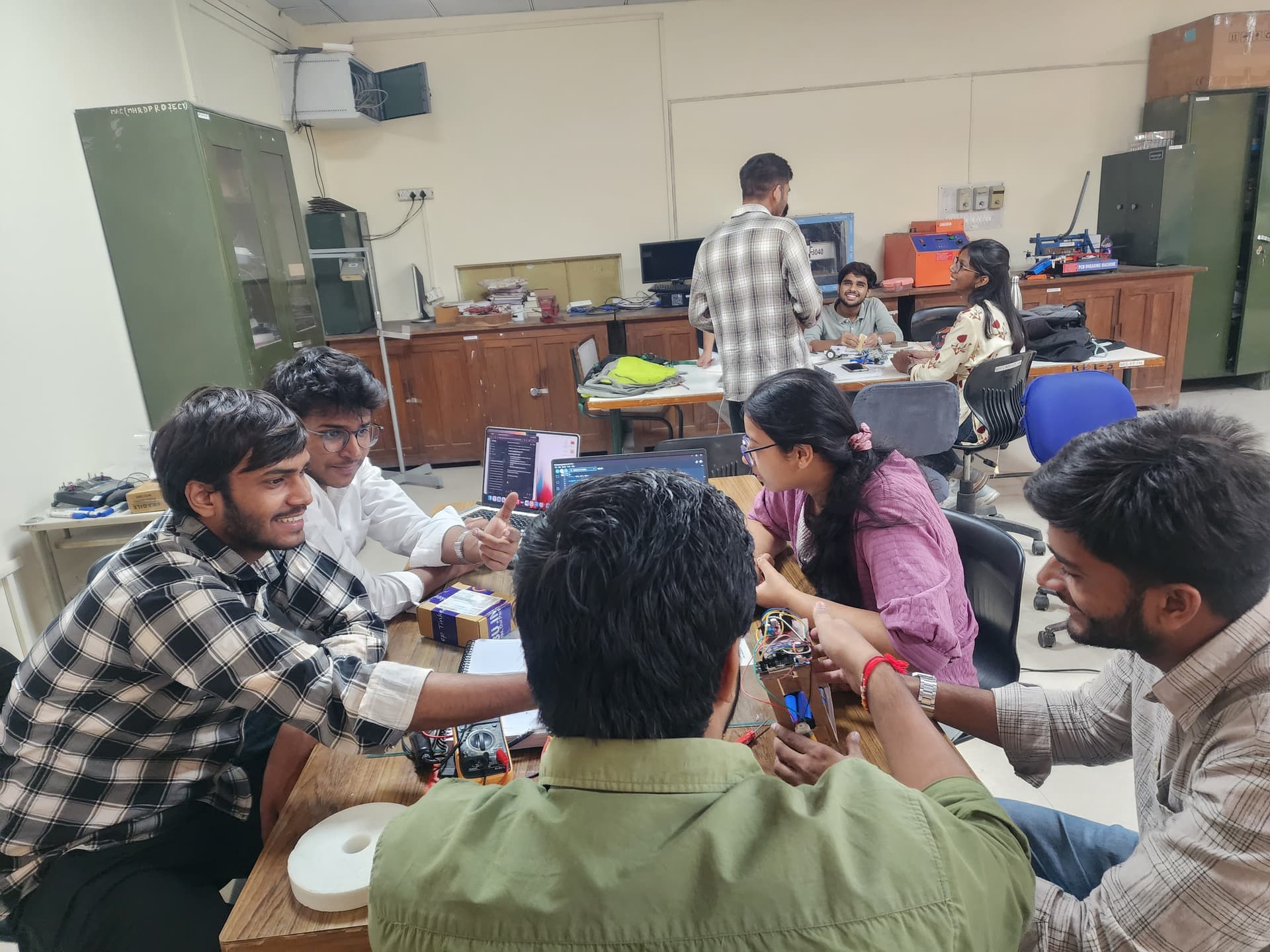
[4 PHOTOS]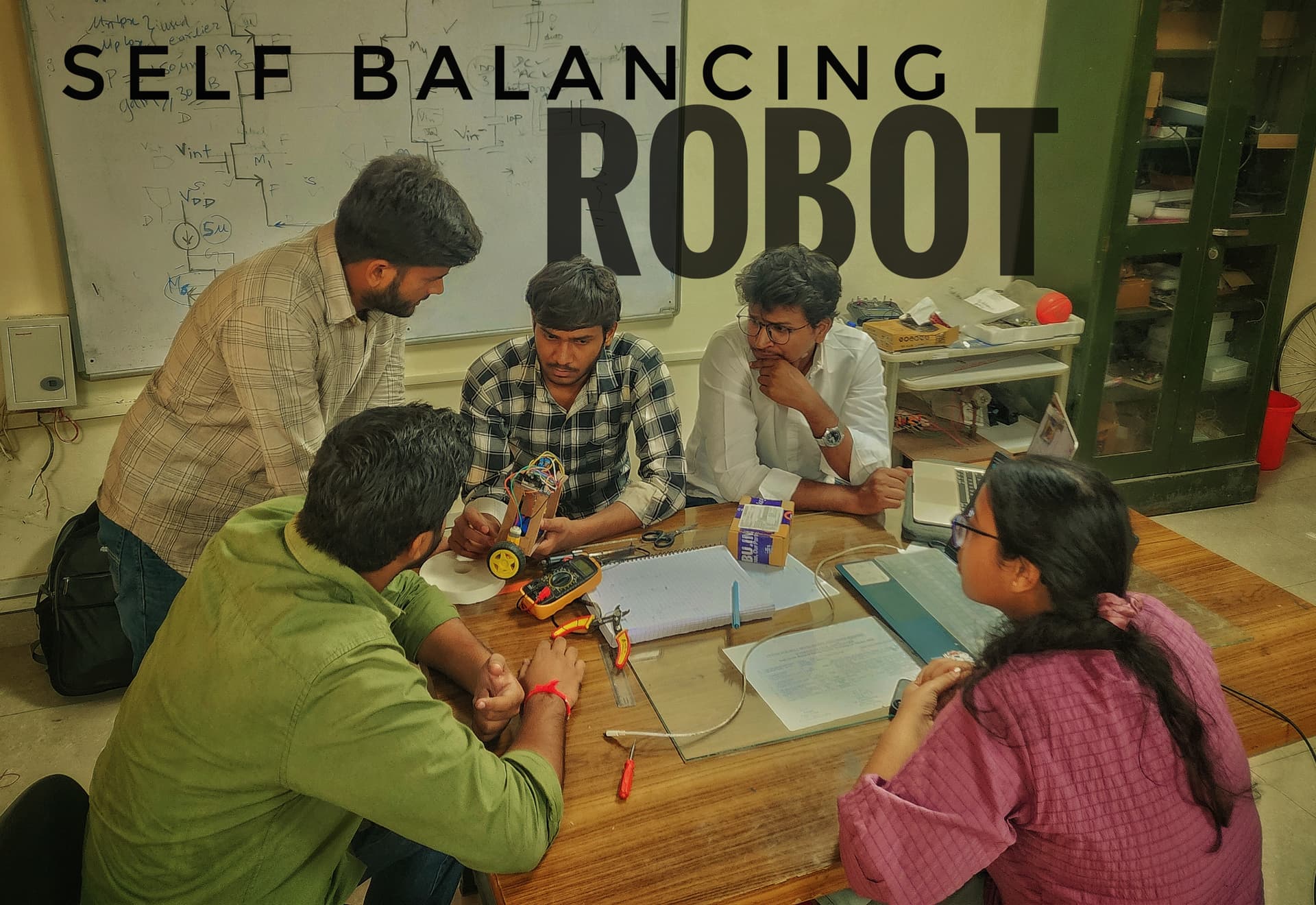
More Projects
 Aerospace
2026
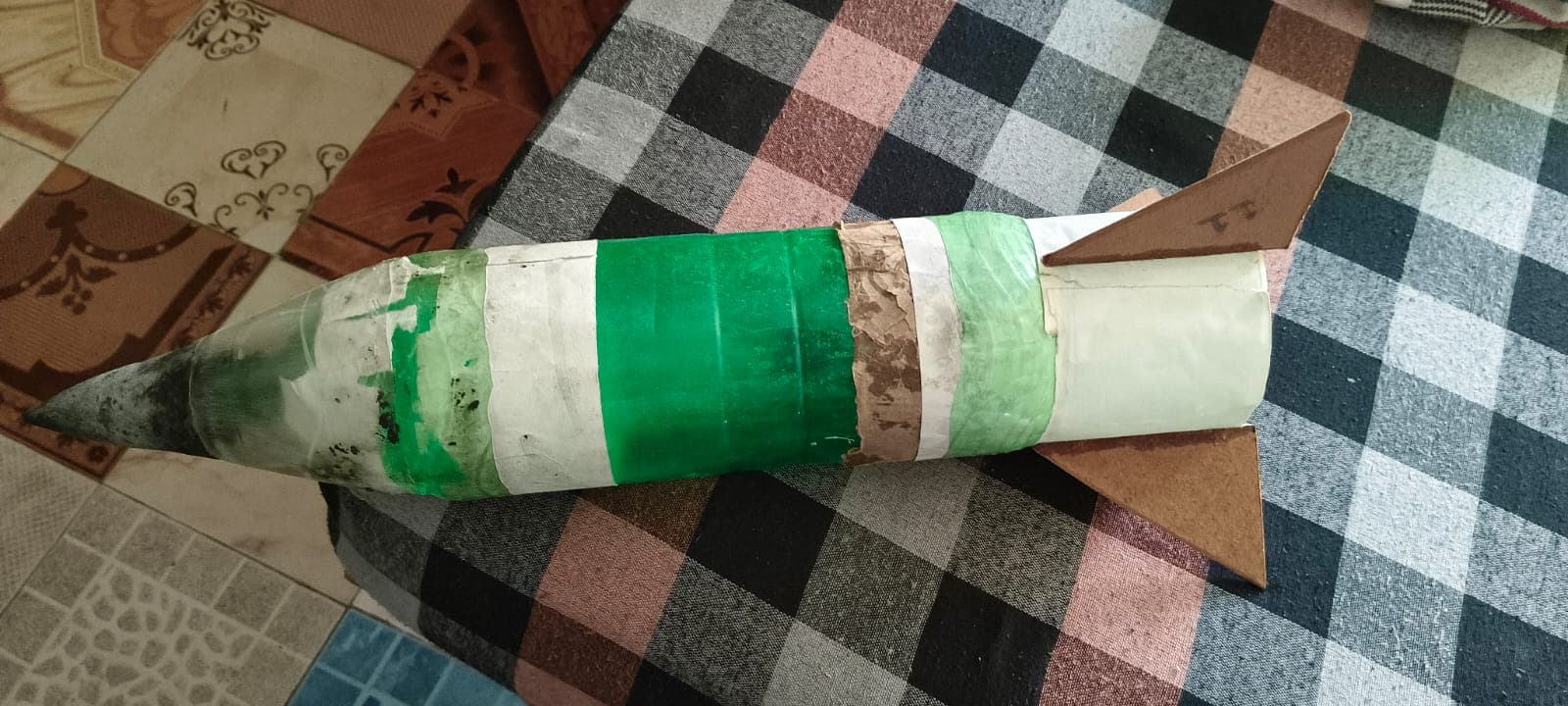
Water Rocket
A pressurised water-and-air rocket engineered for maximum altitude and a clean recovery.
Why we built this
A zero-cost intro to physics and engineering using recycled bottles — perfect for school outreach demos where budgets are tight.
Free technical report & Drive guide available
 Autonomous Systems
2026
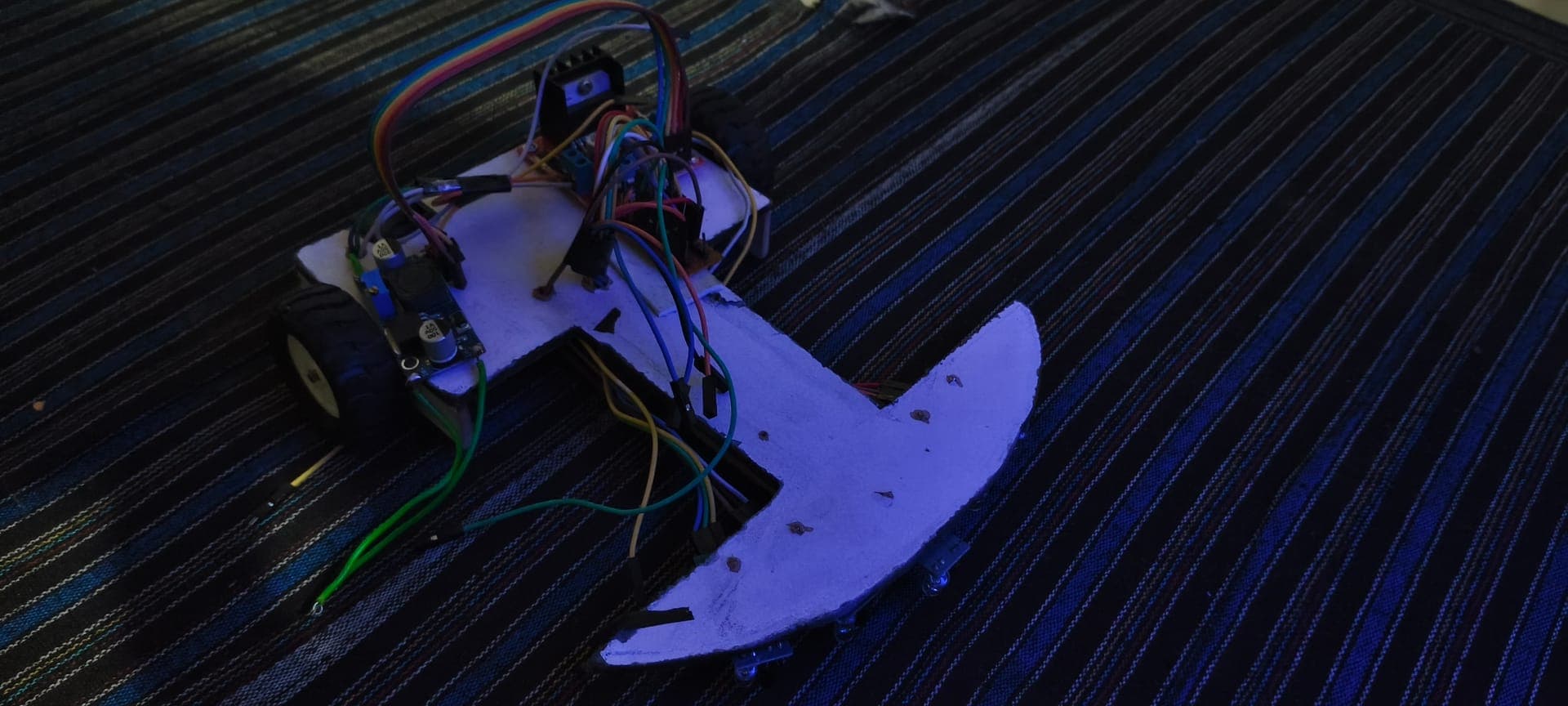
Autonomous 5-Channel IR Line Follower Robot
An autonomous line follower robot with a 5-channel TCRT5000 IR sensor array, L298N differential drive, and PID weighted error logic for smooth trajectory execution.
Why we built this
Standard 2-IR followers produce harsh, jerky turns. We engineered this 5-IR system so students could master proportional-derivative (PID) feedback control on affordable hardware.
Free technical report & Drive guide available
 Autonomous Systems
2026
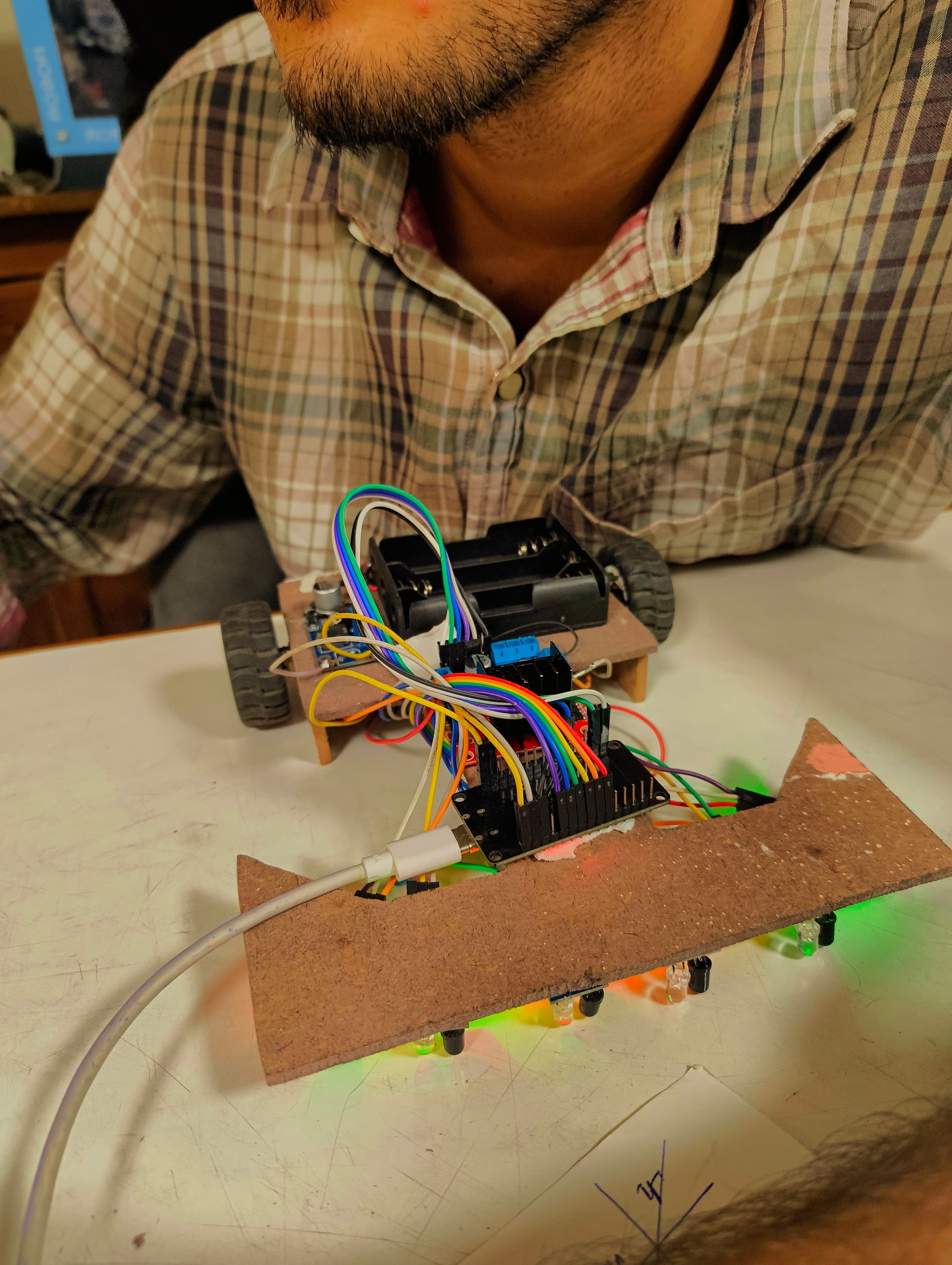
Autonomous Line Follower Robot 2
A second-generation autonomous line tracker featuring a wide-span multi-channel optical sensor bar, high-speed differential drive, and refined PID trajectory recovery algorithms.
Why we built this
Building on our first line follower, Line Follower 2 was designed with an extended sensor baseline and streamlined chassis to achieve higher cornering speeds and tighter tracking accuracy on complex tracks.
Free technical report & Drive guide available